Addiction can make people feel isolated even when they are surrounded by family, friends, and colleagues. Shame, fear, and misunderstanding often prevent individuals from speaking openly about what they are experiencing. Many people believe that they must handle recovery privately, but isolation can make the journey considerably more difficult.
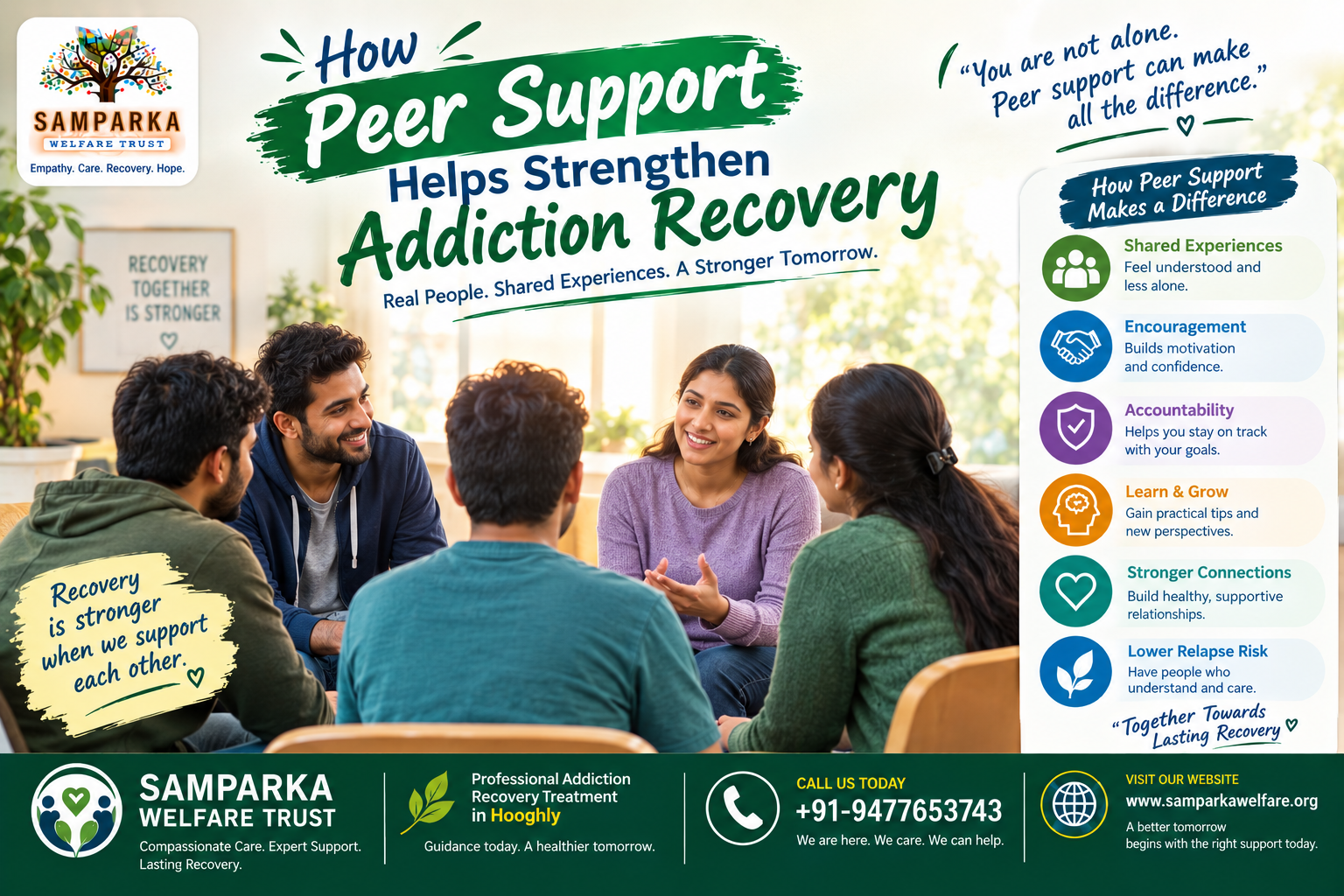
Recovery becomes more manageable when individuals have people who understand their experiences and encourage them through challenging moments. Peer support creates an environment where people can share their struggles, learn from others, and recognise that they are not alone.
For individuals receiving addiction recovery treatment in Hooghly, peer support can become an important part of a broader recovery plan. Alongside professional counselling, medical care, family involvement, and relapse-prevention strategies, meaningful connections can encourage confidence and emotional stability.
At Samparka Welfare Trust, recovery is approached with compassion and understanding. Creating supportive environments can help individuals move beyond shame and focus on rebuilding their lives.
What Is Peer Support in Addiction Recovery?
Peer support involves connecting with people who have experienced addiction, recovery, or similar challenges.
Unlike professional therapy, peer support is based primarily on shared experiences. A person may find comfort in hearing someone else describe a struggle that feels familiar. This can reduce the feeling that nobody understands what they are going through.
Peer support can take different forms, including:
- Recovery support groups
- Group counselling sessions
- Peer-led meetings
- Recovery communities
- Structured rehabilitation activities
- Informal connections between people in recovery
- Online recovery communities where appropriate
Peer support does not replace doctors, therapists, or other healthcare professionals. Instead, it can complement professional treatment by providing encouragement, understanding, and social connection.
Why Addiction Can Create Isolation
Addiction often changes the way individuals interact with the people around them.
Someone struggling with substance dependence may withdraw from family members or stop participating in social activities. They may avoid conversations because they fear judgment or criticism. In some cases, relationships may already have been damaged by behaviours associated with addiction.
Over time, isolation can become part of the problem.
When individuals keep their emotions hidden, stress and negative thoughts can become increasingly difficult to manage. They may also believe that their experiences are unique or that nobody else could understand them.
Peer support can challenge this belief.
Meeting others who have faced similar difficulties can create a sense of belonging. Individuals may begin to understand that asking for support is not a weakness.
For people seeking addiction recovery treatment in Hooghly, this sense of connection can be particularly valuable during difficult stages of recovery.
Shared Experiences Create Understanding
One of the strongest advantages of peer support is the understanding that comes from shared experience.
A person who has never experienced addiction may genuinely care but still struggle to understand cravings, emotional triggers, withdrawal challenges, or the fear associated with relapse.
Someone who has experienced recovery may recognise these difficulties immediately.
This does not mean every person’s recovery story is the same. Addiction affects individuals differently, and treatment must always be personalised.
However, shared experiences can make conversations feel more comfortable.
A person may feel more willing to discuss a difficult day, a strong craving, or an emotional setback when speaking with someone who understands the recovery process.
This openness can encourage healthier emotional expression.
Peer Support Can Reduce Shame
Stigma remains one of the biggest barriers to addiction recovery.
People may be labelled according to their addiction rather than being recognised as individuals with personal experiences, relationships, responsibilities, and aspirations.
Shame can cause individuals to hide their struggles.
They may avoid treatment because they fear what others will think. Some may even delay asking for help until their physical, emotional, or social situation becomes significantly worse.
A supportive peer environment can help challenge this shame.
When individuals hear others openly discuss their own struggles and recovery experiences, addiction becomes easier to discuss without embarrassment. People can begin focusing on recovery instead of constantly blaming themselves for the past.
Compassionate communication can create a healthier foundation for long-term change.
Learning From Other Recovery Journeys
Every recovery journey is different, but other people’s experiences can still provide valuable lessons.
Someone who has been in recovery for a longer period may share how they manage difficult situations, maintain healthy boundaries, or recognise early warning signs.
Another person may explain how they handled a challenging emotional situation without returning to substance use.
These stories can provide practical inspiration.
However, individuals should avoid treating another person’s experience as a replacement for professional advice. What worked for one person may not be suitable for another.
Peer experiences are most helpful when they encourage discussion, motivation, and reflection while professional treatment continues to guide individual care.
Accountability Can Strengthen Recovery
Recovery requires consistent effort.
There may be days when motivation feels strong and other days when continuing the recovery plan feels difficult. Having supportive people around can create a sense of accountability.
When someone knows that others care about their progress, attending counselling, participating in support meetings, or maintaining healthy routines can feel more meaningful.
Accountability does not mean pressure or punishment.
Healthy accountability involves encouragement and honest communication. If someone struggles, the goal should be to help them reconnect with appropriate support rather than making them feel ashamed.
For individuals undergoing addiction recovery treatment in Hooghly, a strong support network can make it easier to remain connected to recovery goals.
The Role of Group Therapy
Group therapy is one setting where professional treatment and peer connection can work together.
A trained therapist guides the discussion while participants have opportunities to share their thoughts and experiences.
Group therapy may help individuals:
- Improve communication skills
- Understand emotional triggers
- Develop healthier coping strategies
- Listen to different perspectives
- Reduce feelings of isolation
- Practise expressing emotions
- Build confidence
- Develop supportive relationships
The professional facilitator helps maintain a safe and respectful environment.
Participants can learn from one another while receiving structured therapeutic guidance.
Peer Support and Relapse Prevention
Relapse prevention involves understanding situations that may increase the risk of returning to substance use.
Triggers can include stress, loneliness, conflict, certain social environments, emotional pain, or contact with previous substance-use patterns.
Peer support can help individuals recognise that difficult moments are part of the recovery process.
Someone may notice that another participant successfully managed a similar trigger by seeking support, changing their environment, or using a coping strategy learned in therapy.
These examples can encourage individuals to respond differently when they encounter their own challenges.
The goal is not to guarantee that relapse will never occur. Instead, recovery support should help individuals identify risks early and seek professional assistance when needed.
Building Healthy Relationships
Addiction can sometimes lead to relationships becoming centred around conflict, secrecy, or mistrust.
Recovery creates an opportunity to develop healthier connections.
Peer communities can teach individuals important relationship skills, including:
- Listening without immediately reacting
- Respecting personal boundaries
- Communicating honestly
- Asking for help
- Offering support without controlling others
- Accepting constructive feedback
- Taking responsibility for personal decisions
These skills can eventually improve relationships outside the recovery environment as well.
Healthy relationships provide emotional support while also encouraging personal responsibility.
Peer Support Helps Build Confidence
Addiction can significantly affect self-esteem.
Repeated attempts to stop using substances, relationship problems, financial difficulties, or social stigma may cause individuals to believe they cannot change.
Peer support can provide small reminders that progress is possible.
Attending a meeting, speaking honestly about an experience, completing a counselling session, or successfully managing a difficult trigger can become a meaningful achievement.
Hearing encouragement from others can reinforce these positive steps.
Over time, individuals may begin to see themselves differently—not simply as someone who has struggled with addiction, but as someone actively working toward recovery.
That change in perspective can strengthen confidence.
Supporting Someone Without Enabling Them
Peer support should always involve healthy boundaries.
Supporting another person does not mean covering up harmful behaviour, providing substances, ignoring repeated warning signs, or taking responsibility for their recovery.
Healthy support encourages responsibility.
A supportive peer might listen, encourage professional help, share a personal experience, or remind someone about their recovery goals.
However, serious medical or psychological concerns should be directed toward qualified professionals.
This distinction is important because recovery requires both compassion and accountability.
How Families Can Encourage Positive Connections
Families can also help individuals build healthier support networks.
They can encourage participation in appropriate counselling or support groups and show interest in recovery without constantly questioning or monitoring the person.
Family members should understand that peer support is not a replacement for family relationships.
Instead, it provides another layer of connection.
A person may feel comfortable discussing certain recovery experiences with peers because they share similar backgrounds. Family members can complement this support by providing emotional encouragement and maintaining healthy communication at home.
Family counselling can also help relatives understand how best to participate in the recovery journey.
Choosing the Right Support Environment
Not every support environment will be suitable for every individual.
A healthy recovery community should promote:
- Respect
- Confidentiality
- Compassion
- Personal responsibility
- Non-judgmental communication
- Healthy boundaries
- Recovery-focused discussions
Individuals should feel safe expressing themselves without being pressured into sharing information they are not comfortable discussing.
Professional guidance can help determine which combination of individual therapy, group therapy, family counselling, and peer support is appropriate.
For those seeking addiction recovery treatment in Hooghly, choosing a trustworthy organisation with compassionate professionals and structured support is an important part of the recovery process.
What Happens When Someone Feels Like Giving Up?
Recovery can involve difficult periods.
Someone may experience intense cravings, emotional exhaustion, frustration, or disappointment. During these moments, isolation can make negative thoughts stronger.
Having a reliable support network provides an alternative.
A person can reach out instead of remaining alone with overwhelming emotions. Talking to a peer, counsellor, family member, or healthcare professional can create an opportunity to pause and reconsider the next step.
If someone is experiencing severe withdrawal symptoms, thoughts of self-harm, or an immediate medical emergency, professional or emergency medical assistance should be sought without delay.
Peer support is valuable, but it should never replace urgent medical care.
Creating a Strong Recovery Network
A strong recovery network does not have to include dozens of people.
Quality matters more than quantity.
An individual’s network may include:
A counsellor: for professional emotional and behavioural guidance.
A doctor or treatment professional: for medical concerns and appropriate treatment.
Family members: for personal and emotional support.
Trusted friends: for healthy social connection.
Peers in recovery: for shared experiences and encouragement.
Support groups: for regular connection and accountability.
Together, these relationships can create a stronger foundation for recovery.
How Samparka Welfare Trust Supports Recovery
At Samparka Welfare Trust, recovery is understood as a process that involves more than treating substance dependence.
Emotional support, professional guidance, family involvement, healthy relationships, and continued encouragement can all contribute to a stronger recovery journey.
Individuals receiving addiction recovery treatment in Hooghly may benefit from an environment where they can discuss their challenges with compassion and dignity.
The aim is to help individuals develop healthier coping strategies, rebuild confidence, strengthen relationships, and move toward greater stability.
Conclusion
Addiction can make people feel isolated, misunderstood, and disconnected from the people around them. Recovery does not have to be faced alone.
Peer support creates opportunities to share experiences, learn from others, develop accountability, and rebuild confidence. When combined with professional treatment, family involvement, and relapse-prevention planning, it can become a valuable part of long-term recovery.
For individuals and families looking for addiction recovery treatment in Hooghly, finding the right support system can make an important difference.
Recovery is not about proving that someone is strong enough to handle everything alone. It is about recognising when support is needed and having the courage to accept it.
Samparka Welfare Trust remains committed to supporting individuals and families with compassion, understanding, and recovery-focused care.