Addiction rarely affects only physical health. It can influence emotions, relationships, confidence, decision-making, and everyday behaviour. Many people struggling with addiction understand that substance use is harming their lives, yet they may find it difficult to stop or remain consistent with recovery.
This is where counselling becomes an important part of professional recovery. Addiction treatment is not simply about removing a substance from the body. Long-term recovery also requires understanding why addictive behaviours developed, recognising personal triggers, managing difficult emotions, and learning healthier ways to respond to stress.
At Samparka Welfare Trust, counselling forms an important part of compassionate recovery support. Professional guidance can help individuals understand their challenges without judgment and gradually develop practical skills for a healthier future.
Understanding the Role of Counselling in Addiction Recovery
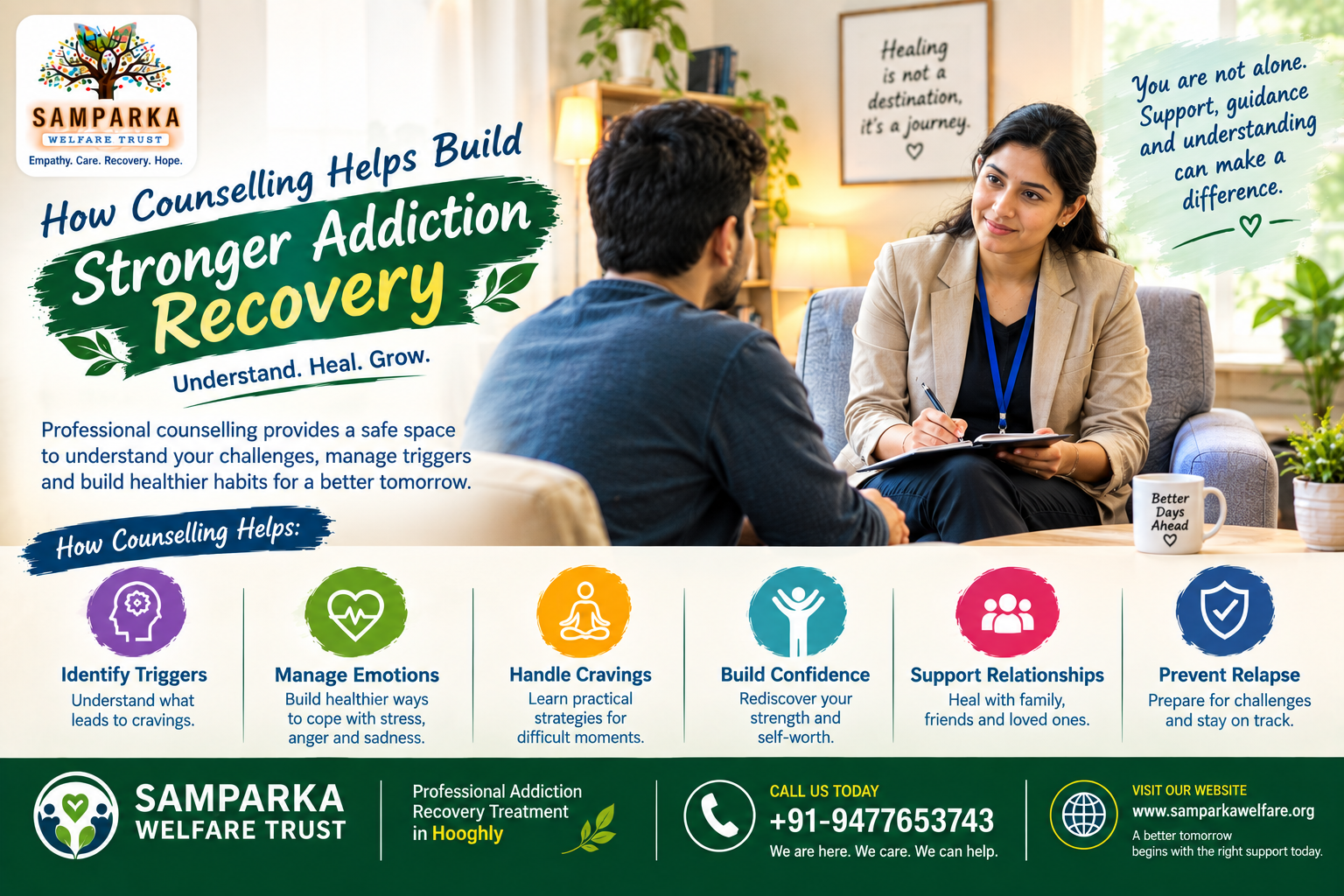
Counselling provides individuals with a safe environment where they can discuss thoughts, emotions, experiences, and recovery challenges openly.
Addiction can sometimes be connected with stress, loneliness, trauma, anxiety, relationship difficulties, social pressure, or other emotional challenges. Without addressing these underlying factors, simply stopping substance use may not resolve the reasons that contributed to addictive behaviour.
Professional counselling helps individuals explore these factors carefully. Therapists can help them identify patterns, understand emotional responses, and develop healthier coping strategies.
For individuals seeking addiction recovery treatment in Hooghly, counselling can therefore become an important component of a structured recovery program.
Identifying Personal Addiction Triggers
Triggers are situations, emotions, people, places, or experiences that may increase cravings or encourage unhealthy behaviours.
For one individual, stress at work may become a trigger. For another, a particular friendship, location, argument, or painful memory may create strong cravings.
Counselling helps individuals recognise these personal patterns.
During therapy, a person may begin asking:
- What situations increase my cravings?
- Which emotions are difficult for me to manage?
- What happens before I experience an urge?
- Which people or environments create pressure?
- How do I normally respond to stress?
Understanding these patterns creates an opportunity to respond differently.
Instead of reacting automatically, individuals can gradually learn to pause, recognise the trigger, and use healthier coping strategies.
Learning Healthier Ways to Manage Emotions
Many people use substances as a way of escaping uncomfortable emotions. Anger, sadness, anxiety, loneliness, frustration, or emotional exhaustion may become difficult to manage.
Unfortunately, substance use may provide temporary relief while creating additional physical, emotional, and social problems.
Counselling encourages healthier emotional management.
Individuals may learn techniques such as:
- Recognising emotional warning signs
- Communicating feelings appropriately
- Managing stressful situations
- Developing relaxation strategies
- Practising healthy problem-solving
- Building emotional awareness
- Replacing destructive responses with constructive behaviours
These skills can become valuable tools throughout recovery.
Managing Cravings More Effectively
Cravings can be one of the most challenging parts of addiction recovery. They may appear unexpectedly and become particularly strong during stressful situations.
Counselling does not simply tell someone to “ignore” cravings. Instead, professional support helps individuals understand how cravings develop and identify strategies for managing them.
A therapist may help an individual develop a personal plan that includes recognising early warning signs, avoiding high-risk situations, contacting supportive people, practising healthier distractions, and using learned coping techniques.
Over time, these strategies can help individuals feel more prepared when difficult moments occur.
Building Confidence During Recovery
Addiction can significantly affect self-esteem.
Repeated relapses, broken promises, damaged relationships, financial difficulties, or problems at work can leave individuals feeling guilty or hopeless. Some may begin believing that recovery is impossible.
Counselling can provide a structured environment for rebuilding confidence gradually.
Recovery does not require perfection. Instead, individuals can learn to recognise progress, understand setbacks, and focus on practical improvements.
Small achievements can become meaningful milestones. Attending therapy consistently, managing a difficult craving, communicating honestly, or maintaining a healthy routine can all contribute to rebuilding confidence.
Individual Counselling and Personalised Recovery
Every person’s addiction journey is different. Their substance-use history, emotional experiences, relationships, triggers, and recovery goals may also differ.
This is why personalised counselling can be valuable.
Individual sessions allow therapists to understand the specific challenges affecting a person. Treatment strategies can then be adjusted according to individual needs and progress.
At Samparka Welfare Trust, compassionate guidance focuses on creating a supportive environment where individuals can discuss their experiences openly and work toward practical recovery goals.
Professional addiction recovery treatment in Hooghly can combine counselling with other appropriate recovery services to address different aspects of addiction.
The Importance of Group Counselling
Individual counselling is not the only form of therapeutic support.
Group sessions can also provide valuable experiences during recovery. Being surrounded by people facing similar challenges can reduce feelings of isolation.
Group counselling may help individuals:
- Share experiences
- Learn from others
- Develop communication skills
- Receive encouragement
- Understand different recovery perspectives
- Build accountability
- Feel less alone
Listening to another person’s recovery experience may also help individuals recognise patterns in their own lives.
A supportive group environment can encourage honesty and remind individuals that seeking help is not something they need to feel ashamed about.
Family Counselling and Relationship Healing
Addiction can affect spouses, parents, children, siblings, and close friends. Communication may become difficult after repeated conflicts, broken trust, or financial and emotional stress.
Family counselling can help loved ones understand addiction and communicate more constructively.
It can also help families learn how to provide support while maintaining appropriate boundaries.
Instead of focusing only on blame, counselling encourages conversations around understanding, responsibility, communication, and recovery.
Rebuilding trust takes time, but professional guidance can help families approach the process more constructively.
Counselling and Relapse Prevention
Recovery continues beyond the initial treatment period.
Individuals eventually return to everyday environments where they may encounter stress, social pressure, emotional challenges, or familiar triggers.
Counselling can help prepare individuals for these situations.
A relapse-prevention plan may include identifying high-risk situations, recognising early warning signs, developing emergency coping strategies, maintaining supportive relationships, and continuing appropriate professional care.
The objective is to help individuals become better prepared for challenges rather than assuming that recovery will always be easy.
When Should Someone Consider Counselling?
Professional counselling can be considered when addiction begins affecting daily life, relationships, emotional well-being, responsibilities, or physical health.
Some signs that additional support may be helpful include:
- Repeated unsuccessful attempts to quit
- Frequent cravings
- Increasing substance use
- Difficulty controlling behaviour
- Relationship conflicts
- Anxiety, sadness, or emotional instability
- Withdrawal from family and friends
- Problems at work or education
- Relapse after previous recovery attempts
- Feeling unable to manage addiction independently
Seeking counselling does not mean someone has failed. It means they are taking an active step toward understanding their situation and developing healthier strategies.
Building a Stronger Future Through Professional Support
Addiction recovery involves more than stopping harmful substance use. It involves rebuilding routines, relationships, emotional stability, confidence, and a sense of purpose.
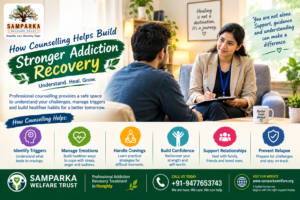
Counselling can support this process by helping individuals understand their triggers, manage emotions, handle cravings, communicate effectively, and prepare for challenging situations.
At Samparka Welfare Trust, compassionate support focuses on helping individuals and families move toward healthier and more stable lives. Professional guidance can make recovery feel more structured and manageable while encouraging individuals to take meaningful steps at their own pace.
If you or someone you love is struggling with addiction, seeking professional support can be an important first step. Addiction recovery treatment in Hooghly can provide access to structured guidance, counselling, and recovery-focused support.
Recovery is not simply about leaving addiction behind. It is about learning how to build a healthier life moving forward. With understanding, professional guidance, consistent effort, and the right support system, positive change is possible.