Recovery from addiction rarely happens in isolation. Behind every successful recovery journey, there is often a family that chooses hope over fear, patience over frustration, and support over judgment. Addiction affects far more than one individual. It impacts parents, spouses, siblings, children, and close friends who experience emotional pain throughout the journey.
Many people believe treatment alone is enough. While professional care plays the most important role, lasting recovery becomes stronger when families actively participate in the healing process.
At Samparka Welfare Trust, we believe addiction recovery treatment extends beyond medical care. Recovery flourishes when individuals feel understood, encouraged, and emotionally supported throughout every stage of rehabilitation.
This article explains why family involvement matters, how it improves recovery outcomes, and practical ways families can become powerful partners in lasting sobriety.
Addiction Is a Family Disease
Addiction affects every relationship surrounding the individual. Trust slowly disappears after repeated broken promises. Communication becomes difficult. Families often experience fear, anxiety, financial stress, and emotional exhaustion.
Parents constantly worry about safety.
Spouses struggle with disappointment and uncertainty.
Children frequently grow up in emotionally unstable environments.
Eventually, addiction changes daily family life completely.
These challenges create emotional wounds that require healing alongside addiction itself.
Professional addiction recovery treatment in Hooghly focuses not only on the patient but also on rebuilding healthy family relationships.
When families heal together, long-term recovery becomes significantly stronger.
Why Family Support Matters During Recovery
Recovery involves more than quitting substances.
Individuals must rebuild confidence, develop healthier habits, repair damaged relationships, and learn new ways of handling stress.
This process becomes much easier when family members provide consistent encouragement.
Supportive families help recovering individuals remain motivated during difficult moments.
Positive encouragement also reduces feelings of loneliness, shame, and hopelessness.
Knowing someone genuinely believes in recovery often becomes a powerful source of strength.
Professional therapists frequently observe higher treatment success among individuals who receive active family participation throughout rehabilitation.
Samparka Welfare Trust encourages families to become partners in recovery rather than silent observers.
Emotional Benefits of Family Involvement
Family support creates emotional stability during recovery.
Many recovering individuals struggle with guilt over past mistakes.
Supportive conversations gradually replace self-blame with hope.
Patients begin believing that positive change is possible.
Family encouragement also helps reduce anxiety during withdrawal and rehabilitation.
Simple acts like listening patiently, attending counselling sessions, or celebrating small milestones strengthen emotional confidence.
Feeling accepted instead of judged significantly improves mental well-being.
Healthy emotional connections become important protective factors against relapse.
Recovery feels less overwhelming when individuals know they are not facing challenges alone.
Rebuilding Trust Takes Time
Trust rarely returns overnight.
Years of addiction often leave emotional scars throughout families.
Promises may have been broken repeatedly.
Arguments may have become common.
Financial problems may have damaged relationships deeply.
Recovery provides an opportunity to rebuild these relationships gradually.
Professional family counselling teaches healthier communication techniques.
Patients learn accountability.
Family members learn patience.
Both sides begin understanding each other’s emotional struggles.
Small consistent actions gradually rebuild confidence.
Professional addiction recovery treatment emphasizes progress rather than perfection.
Family Therapy Strengthens Recovery
Family therapy remains one of the most valuable components of rehabilitation.
Counselling sessions create safe environments where everyone can express emotions honestly.
Therapists help families identify unhealthy communication patterns.
Many households unknowingly develop behaviours like enabling, excessive criticism, emotional avoidance, or codependency.
Family therapy replaces these unhealthy habits with healthier communication strategies.
Sessions may include:
- Conflict resolution
- Active listening
- Healthy boundary setting
- Stress management
- Emotional support techniques
- Relapse awareness
These practical skills improve both family relationships and recovery success.
Healthy Boundaries Protect Everyone
Supporting someone does not mean accepting harmful behaviour.
Healthy boundaries are essential.
Families sometimes unknowingly encourage addiction by covering financial problems, making excuses, or avoiding difficult conversations.
Professional counselling teaches families how to remain supportive without enabling addiction.
Healthy boundaries encourage accountability while maintaining compassion.
Examples include:
- Refusing to provide money for addictive substances
- Encouraging professional treatment
- Maintaining respectful communication
- Supporting recovery goals
- Avoiding emotional manipulation
Balanced support creates healthier long-term relationships.
Family Education Reduces Fear
Many misconceptions surround addiction.
Some people believe addiction reflects weak character.
Others believe recovery simply requires stronger willpower.
Education changes these misunderstandings.
Learning about brain chemistry, withdrawal symptoms, emotional triggers, and relapse helps families respond with greater empathy.
Understanding addiction reduces unnecessary blame.
Families begin recognising addiction as a medical and psychological condition requiring professional treatment.
Knowledge creates confidence.
Confident families provide stronger emotional support throughout recovery.
Helping Prevent Relapse
Relapse prevention begins long before rehabilitation ends.
Returning home introduces familiar environments, stressful situations, and emotional triggers.
Family members often become the first people to notice behavioural warning signs.
These may include:
- Social withdrawal
- Mood swings
- Sleep disturbances
- Increased stress
- Dishonesty
- Missing counselling sessions
- Isolation
Recognising these changes early allows families to encourage immediate professional support before small setbacks become major relapses.
Professional addiction recovery treatment includes relapse prevention planning for both patients and families.
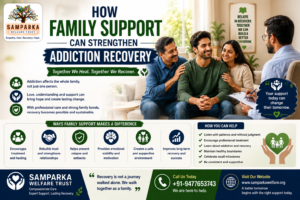
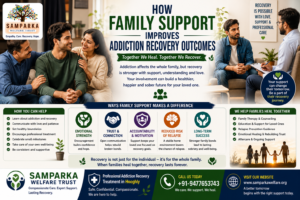
Practical Ways Families Can Help
Recovery becomes stronger through everyday actions.
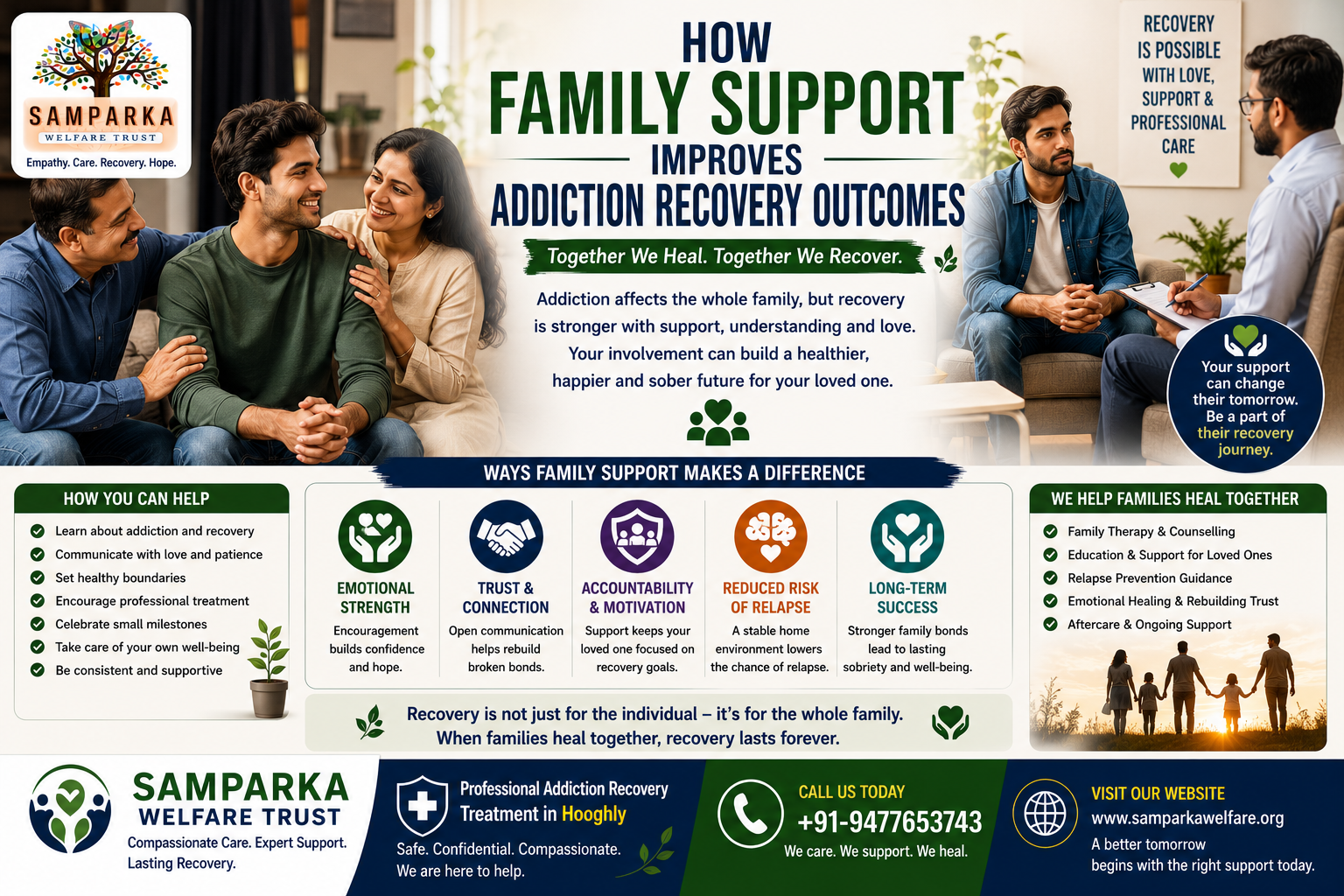
Families can support loved ones by:
- Encouraging regular counselling appointments
- Participating in family therapy
- Maintaining positive communication
- Celebrating recovery milestones
- Supporting healthy daily routines
- Encouraging physical exercise
- Promoting balanced nutrition
- Reducing unnecessary stress at home
- Being patient during emotional challenges
- Avoiding criticism and blame
These simple habits create stable environments where recovery can continue successfully.
Common Mistakes Families Should Avoid
Even loving families sometimes unintentionally make recovery harder.
Common mistakes include:
- Constantly reminding individuals about past mistakes
- Expecting immediate behavioural changes
- Controlling every decision
- Ignoring their own emotional well-being
- Providing financial support without accountability
- Using guilt as motivation
- Assuming relapse means complete failure
Recovery is a gradual process.
Patience and consistency usually produce better results than pressure.
Professional guidance helps families avoid these common challenges.
Recovery Is Stronger Together
Addiction may isolate individuals, but recovery reconnects them with meaningful relationships.
Successful rehabilitation strengthens emotional health, family stability, communication, and personal confidence.
Professional treatment provides the medical care.
Families provide the emotional foundation.
Together, these two elements create lasting recovery.
At Samparka Welfare Trust, we believe every individual deserves compassionate treatment, and every family deserves hope.
Our experienced professionals work closely with both patients and their loved ones to build healthier relationships that support lifelong sobriety.
Conclusion
Recovery is never a journey that someone has to walk alone.
Professional addiction recovery treatment provides the medical care, therapy, and structured guidance necessary for lasting change.
Family support provides encouragement, accountability, and emotional strength that continue long after rehabilitation ends.
When professional treatment and compassionate family involvement work together, recovery becomes more sustainable, healthier, and more hopeful.
If someone you love is struggling with addiction, don’t wait until the situation becomes worse.
Reach out to Samparka Welfare Trust today.
With professional care, family support, and a commitment to healing, lasting recovery is possible.