Addiction recovery is the process of healing from substance dependence and rebuilding a healthier, more stable life. It’s not just about quitting a substance. It involves emotional strength, mental resilience, and physical adjustment. For many individuals in Kolkata and across India, this phase can feel overwhelming, filled with self-doubt, triggers, and the fear of relapse.
What often gets overlooked is the power of words during this journey. A simple sentence can either uplift someone or push them deeper into isolation. Families and friends may want to help, but without the right language, even good intentions can hurt.
This blog aims to guide you on what to say, and what not to say, to someone in recovery. Whether your loved one is receiving support from a rehab centre or healing at home, your words can become a powerful tool in their journey toward a better life.
Understanding Addiction Recovery
Addiction recovery is a continuous process that involves healing on multiple levels, physical, emotional, and psychological. Physically, the body adjusts to functioning without substances. Emotionally, individuals confront guilt, anxiety, and sometimes unresolved trauma. Mentally, they learn to manage cravings, triggers, and negative thought patterns.
In a city like Kolkata, where social gatherings often revolve around food and sometimes alcohol, resisting old habits can be especially challenging. Recovery isn’t linear. There are good days and difficult ones. This unpredictability makes individuals in recovery feel vulnerable and sensitive to their surroundings.
They may struggle with self-worth or fear judgment from others. Even casual comments can feel magnified during this stage. That’s why a supportive environment, whether at home, in the community, or through organisations like Samparka Welfare Trust is essential.
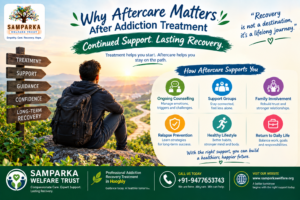
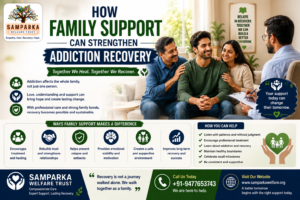
A strong support system like a rehab centre in Kolkata reassures them that they are not alone. It creates a safe space where they can express themselves without fear. Understanding this journey helps you communicate better and offer the kind of support that truly makes a difference.
Why Your Words Matter
Words hold immense power, especially for someone in addiction recovery. The way you speak can influence their confidence, motivation, and overall mental well-being. Positive language can encourage progress, while negative or careless remarks can trigger self-doubt or even relapse.
Encouragement helps individuals feel seen and valued. Simple affirmations like “You’re doing great” can boost their self-esteem. On the other hand, judgmental comments can make them feel ashamed or misunderstood. This emotional impact can slow down their healing process.
Consider real-life situations: a casual joke about drinking at a party or a remark like “Just one won’t hurt” might seem harmless but can be deeply triggering. In Kolkata’s close-knit communities, where conversations are frequent and often personal, being mindful of your words becomes even more important.
Your language should create a sense of safety and trust. Instead of focusing on their past, focus on their efforts and growth. When you choose your words carefully, you become a part of their support system, helping them move forward with confidence and hope.
What to Say to Someone in Recovery
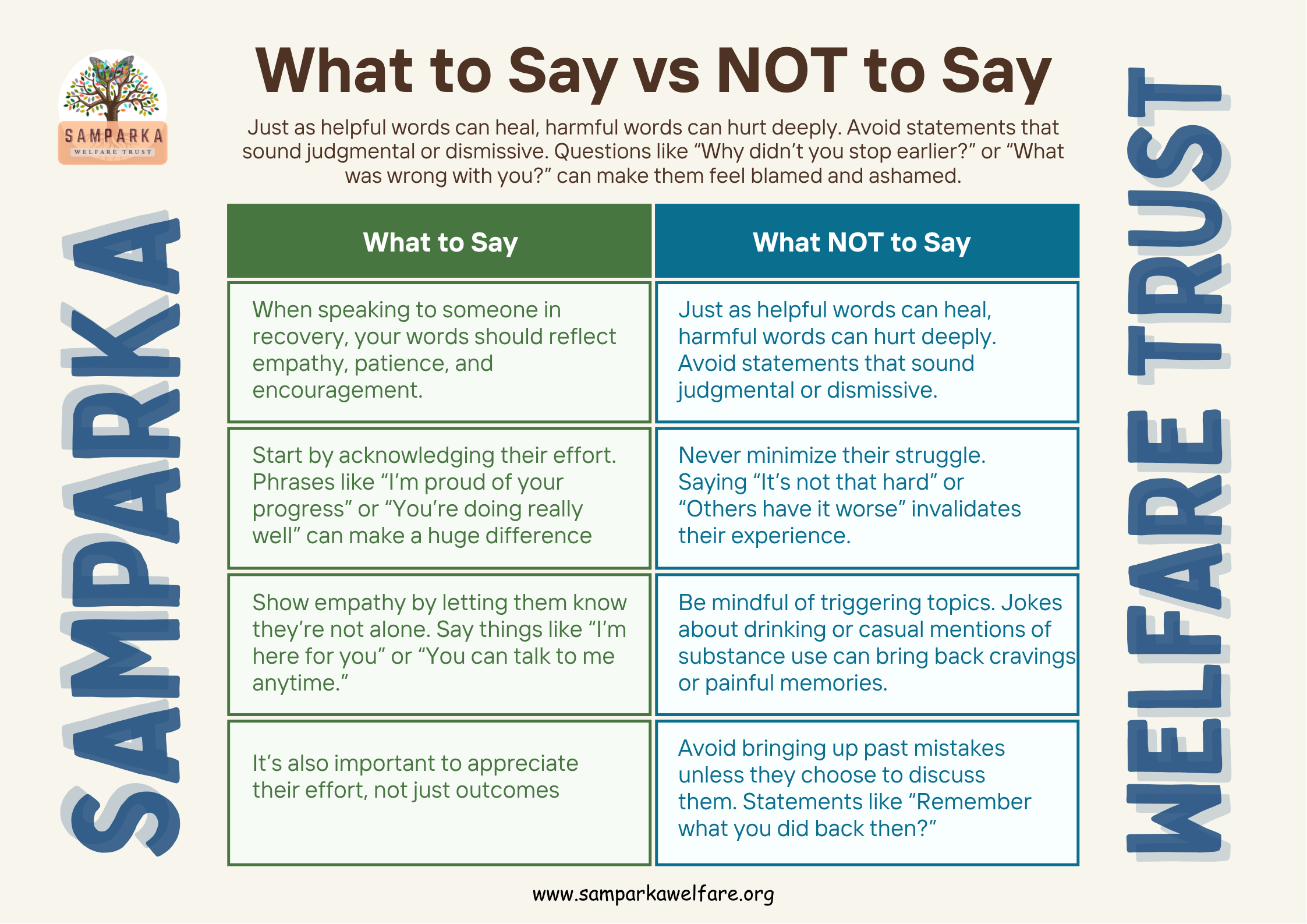
When speaking to someone in recovery, your words should reflect empathy, patience, and encouragement. You don’t need perfect sentences, just genuine care.
Start by acknowledging their effort. Phrases like “I’m proud of your progress” or “You’re doing really well” can make a huge difference. Recovery is not easy, and recognising even small wins can motivate them to keep going.
Show empathy by letting them know they’re not alone. Say things like “I’m here for you” or “You can talk to me anytime.” These simple reassurances create emotional safety.
It’s also important to appreciate their effort, not just outcomes. Instead of focusing on how far they still have to go, appreciate how far they’ve come.
Be patient and positive. Avoid rushing them or expecting instant change. Supportive phrases you can use include:
- “Take your time, I’m with you.”
- “Every step counts.”
- “You’ve come a long way.”
Your words should act as a steady support system. Something they can rely on during both good days and challenging moments.
What NOT to Say
Just as helpful words can heal, harmful words can hurt deeply. Avoid statements that sound judgmental or dismissive. Questions like “Why didn’t you stop earlier?” or “What was wrong with you?” can make them feel blamed and ashamed.
Never minimize their struggle. Saying “It’s not that hard” or “Others have it worse” invalidates their experience. Recovery is different for everyone, and such comparisons can be damaging.
Be mindful of triggering topics. Jokes about drinking or casual mentions of substance use can bring back cravings or painful memories. In social settings around Kolkata, where humour is often used to connect, it’s important to stay sensitive.
Avoid bringing up past mistakes unless they choose to discuss them. Statements like “Remember what you did back then?” can reopen emotional wounds.
Other phrases to avoid include:
- “Just control yourself.”
- “One time won’t matter.”
- “You should be over this by now.”
Choosing silence over harmful words is always better. Respect their journey and focus on being supportive rather than critical.
Common Mistakes People Make
Many people unintentionally make mistakes while trying to help someone in recovery. One common mistake is giving unsolicited advice. While your intention may be good, constant suggestions can feel overwhelming and controlling.
Another mistake is being overly protective. Monitoring their every move or making decisions for them can take away their sense of independence. Recovery is about regaining control over one’s life, and too much interference can hinder that process.
Expecting quick results is another issue. Recovery takes time, and setbacks can happen. Pressuring someone to “get better faster” can create unnecessary stress.
Comparing their journey with others is equally harmful. Saying things like “Someone else recovered faster” can make them feel inadequate. Every individual’s path is unique.
In Kolkata’s family-oriented culture, where involvement is high, these mistakes are common but avoidable. The key is to support without controlling, guide without forcing, and understand without judging.
Being aware of these mistakes helps you become a more effective and compassionate support system.
Tips for Communicating Better
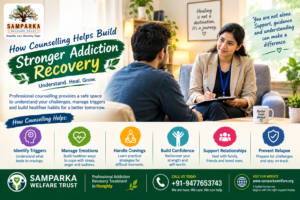
Effective communication plays a vital role in supporting someone through recovery. Start by practicing active listening. Give them your full attention without interrupting or judging. Sometimes, just being heard is more powerful than any advice.
Maintain a non-judgmental attitude. Accept their feelings and experiences without criticism. This builds trust and encourages open conversations.
Respect boundaries. If they’re not ready to talk about something, don’t push. Allow them to share at their own pace.
Educating yourself about addiction is also important. Understanding the challenges they face helps you respond with empathy. Organisations like Samparka Welfare Trust often provide valuable resources and guidance for families.
Consistency is key. Be there for them not just during tough times but also in moments of progress. Reliable support creates a sense of stability.
Small changes in your communication style can make a big difference. When your words reflect understanding and patience, you create a safe and supportive environment that encourages healing.
How to Offer Long-Term Support
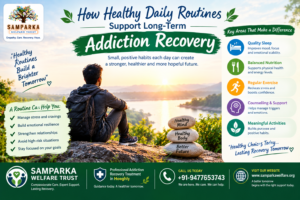
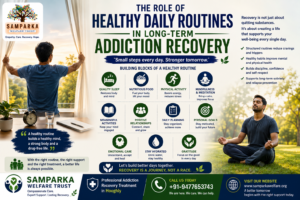
Supporting someone in recovery is not a one-time effort—it’s a long-term commitment. Encourage healthy habits such as regular exercise, balanced meals, and structured routines. These small lifestyle changes can significantly improve their overall well-being.
Celebrate milestones, no matter how small. Whether it’s a week of sobriety or a personal achievement, acknowledging progress boosts confidence and motivation.
Be present without applying pressure. Your consistent presence reassures them that they have someone to rely on, even during difficult times.
Encourage professional help when needed. If they are connected with a rehab centre in Kolkata, support their decision to continue treatment and follow guidance from professionals. Services offered by Samparka Welfare Trust can provide structured care and counselling tailored to individual needs.
In Kolkata, where community and family play a strong role, long-term support can truly transform someone’s journey.
Remember, your role is not to fix them but to stand by them. Your steady support can help them rebuild their life with strength and dignity.
Words can heal, motivate, and inspire, but they can also hurt if used carelessly. When supporting someone in addiction recovery, what you say truly matters. Your language can either become a pillar of strength or a source of stress.
By choosing empathy over judgment, patience over pressure, and understanding over criticism, you can make a meaningful difference in their journey. Recovery is not easy, but with the right support system, it becomes more manageable and hopeful.
If your loved one is struggling, remember that professional help combined with compassionate communication can create lasting change. Samparka Welfare Trust is committed to guiding individuals and families through this journey with care and expertise.
Be kind with your words. They might be the encouragement someone needs to keep going.