When most of us picture addiction, we imagine a young person struggling with drugs or alcohol. Rarely do we think of a grandfather who pours a larger drink every evening, or a grandmother who takes extra sleeping tablets to get through the night. Yet addiction in older adults is real, it grows quietly, and it is far more likely to go unnoticed.
At Samparka Welfare Trust, we work with individuals and families through both de-addiction treatment and elderly care. We see how closely loneliness, health problems and substance use can be linked in later life. This blog explains why addiction in seniors stays hidden, which warning signs to watch for, and how families in Kolkata can respond with patience and dignity.
Why Addiction in Seniors Stays Hidden
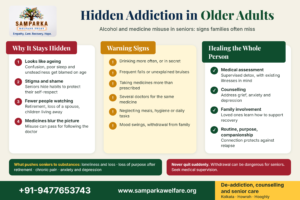
Older adults rarely fit the image people expect, so their struggles are easily explained away. A few reasons stand out:
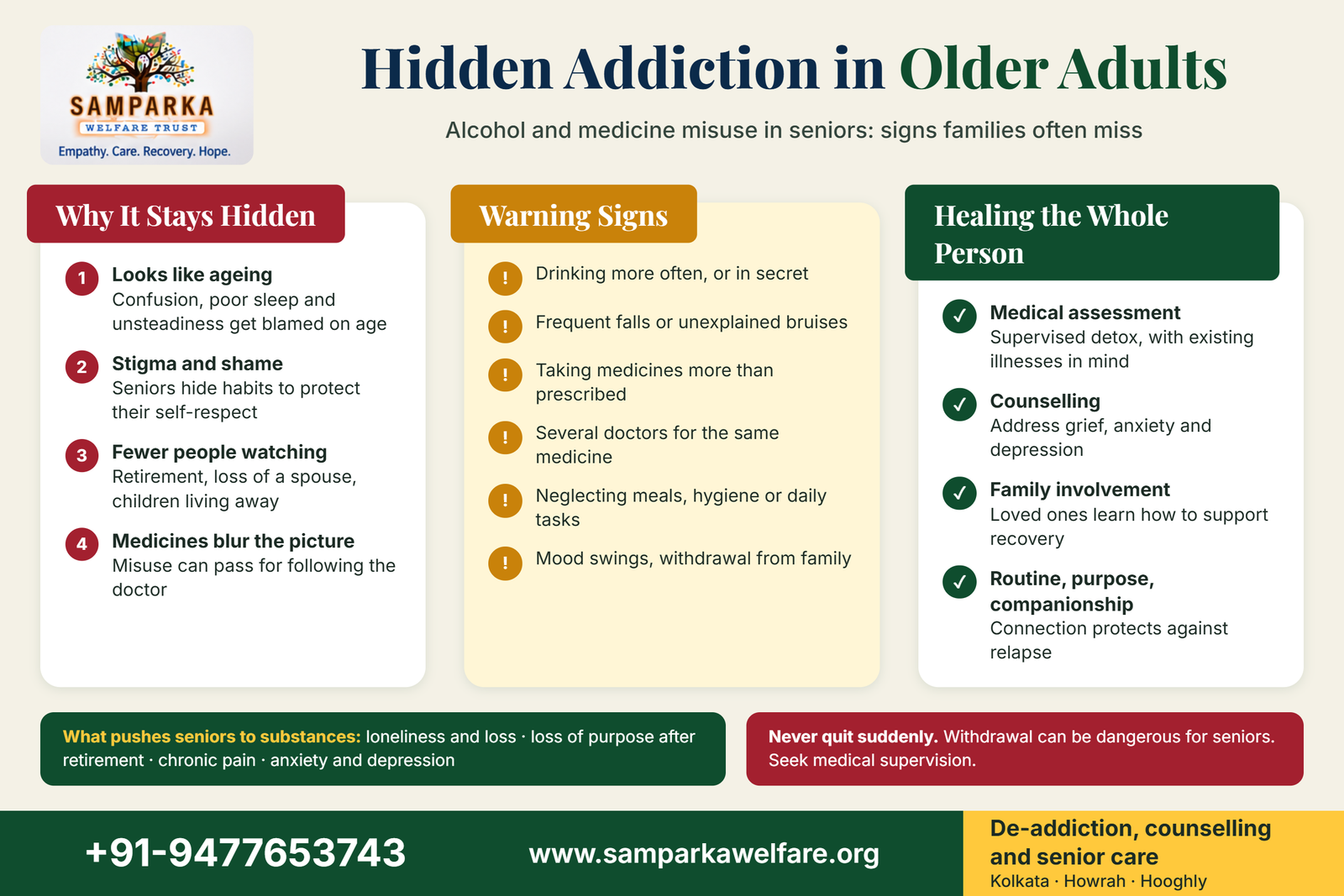
- Symptoms look like ageing. Confusion, unsteady walking, memory lapses, poor sleep and low mood are often blamed on age rather than on alcohol or medicines.
- Stigma and shame. Many seniors grew up when addiction was seen as a moral failure. They may hide their habit to protect their family’s name or their own self-respect.
- Fewer people watching. Retirement, children moving to other cities and the loss of a spouse mean fewer people notice changes in behaviour.
- Medicines blur the picture. Seniors often take several prescriptions, so misuse of sleeping pills, painkillers or sedatives can pass for “following the doctor’s orders.”
Because of this, the problem may continue for years before anyone asks the right question.
What Pushes Older Adults Towards Alcohol and Medicines
Addiction rarely begins without a reason. In later life, the reasons are often emotional and deeply human.
Loneliness and loss. Losing a life partner or close friends, or feeling like a burden at home, can leave a painful emptiness. Alcohol or tablets may become a way to numb it.
Loss of purpose. After retirement, the structure of work disappears. Without daily goals, long empty hours can slowly turn a casual drink into a daily habit.
Chronic pain and illness. Conditions such as arthritis, diabetes or heart problems can bring ongoing pain and sleepless nights. Painkillers or sedatives taken for relief may become something the person feels unable to stop.
Anxiety and depression. Untreated worry, sadness, or fear of illness and death can push people towards substances for comfort.
Understanding these causes changes how we respond. A senior struggling with substances is not weak or careless. They are often a person in pain who has not received enough support.
Warning Signs Families Should Not Ignore
No single sign proves a problem, but a combination, or a sudden change, deserves attention.
- Drinking more often or in secret, or hiding bottles around the house
- Frequent falls, bruises or unexplained injuries
- Taking medicines more often than prescribed, or running out of prescriptions early
- Visiting several doctors or pharmacies for the same type of medicine
- Neglecting meals, hygiene or household tasks they once managed
- Sudden irritability, mood swings, withdrawal from family or loss of interest in hobbies
- Slurred speech, drowsiness or confusion that seems worse than usual
- Becoming defensive or angry when drinking or medicines are mentioned
If you notice several of these, it is better to gently look into it than to wait and hope it passes.
Why Age Makes the Risks Higher
The body changes with age. It processes alcohol and medicines more slowly, so an amount a person once handled comfortably can now have a much stronger effect. Alcohol can interact dangerously with common medicines for blood pressure, diabetes, sleep or pain. It can worsen heart problems, disturb sleep, weaken balance and raise the chance of falls and fractures, which can be life-changing at an older age.
Withdrawal also needs care. Suddenly stopping alcohol or certain sedatives after long use can cause serious symptoms and can be dangerous, especially for older people with other health conditions. This is why seniors should never be pushed to quit overnight on their own. Detoxification should happen under proper medical guidance and supervision.
How to Start the Conversation
Talking to a parent or grandparent about substance use is never easy. A few principles help:
- Choose a calm, private moment, not an argument or a family gathering.
- Lead with love and concern. Say “I am worried because I care about you,” rather than “You have a problem.”
- Use specific, non-judgmental observations, such as “You seemed very tired and unsteady last week.”
- Listen more than you speak. Let them share their feelings of loneliness, pain or fear.
- Avoid labels such as “addict” or “drunkard.” Respect protects dignity, and dignity makes honesty possible.
- Be patient. The first conversation may not lead to acceptance. Return to it gently, and consider involving a trusted doctor or counsellor.
Families should also look after themselves. Supporting a loved one through addiction can be exhausting, and professional guidance helps everyone.
Healing the Whole Person
Recovery in older adults works best when it treats the whole person, not just the habit. Effective care usually includes:
- Medical assessment and supervised detox where needed, with attention to existing health conditions and medicines.
- Counselling and psychotherapy to address grief, anxiety, depression and the feelings that started the cycle.
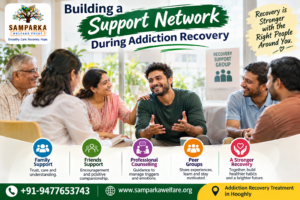
- Family involvement, so loved ones understand the condition and learn how to support recovery.
- Rebuilding routine and purpose through regular meals, gentle activity, good sleep and meaningful daily engagement.
- Community and companionship, because connection is one of the strongest protections against relapse.
Recovery is also not a one-time event. A supportive environment after treatment, where an older person feels safe, respected and not alone, plays a major role in staying well. For some seniors, especially those who live alone or whose families cannot provide full-time care, a safe residential setting with trained staff and compassionate company can make a real difference.
How Samparka Welfare Trust Can Help
Samparka Welfare Trust is a healing community and welfare centre based in Uttarpara, serving Kolkata, Howrah, Hooghly and nearby areas. We offer drug and alcohol de-addiction, rehabilitation, detoxification and counselling for mild psychological and lifestyle concerns. Alongside these, we provide care for senior citizens through our old age home. Our psychologists work with each person on a personalised plan, and we aim to keep our services affordable and our environment hygienic, safe and respectful.
Whether you are worried about a parent’s drinking, a grandparent’s medicines or your own habits, you do not have to work it out alone. A conversation with our team is simply a phone call away, and it can be the first step toward clarity.
Final Thoughts
Addiction has no age limit, and neither does recovery. Older adults deserve the same compassion, medical care, and hope as anyone else. If someone in your family is showing the signs above, act early and act kindly.
This article is for general awareness and is not a substitute for professional medical advice.