Addiction is not a moral failure. It is a complex health condition influenced by psychological, biological, and social factors. Yet, stigma remains one of the biggest barriers preventing individuals from seeking help early. The fear of judgment, shame, or social exclusion often delays treatment, making addiction recovery more difficult and relapse more likely.
Understanding the Cost of Delay
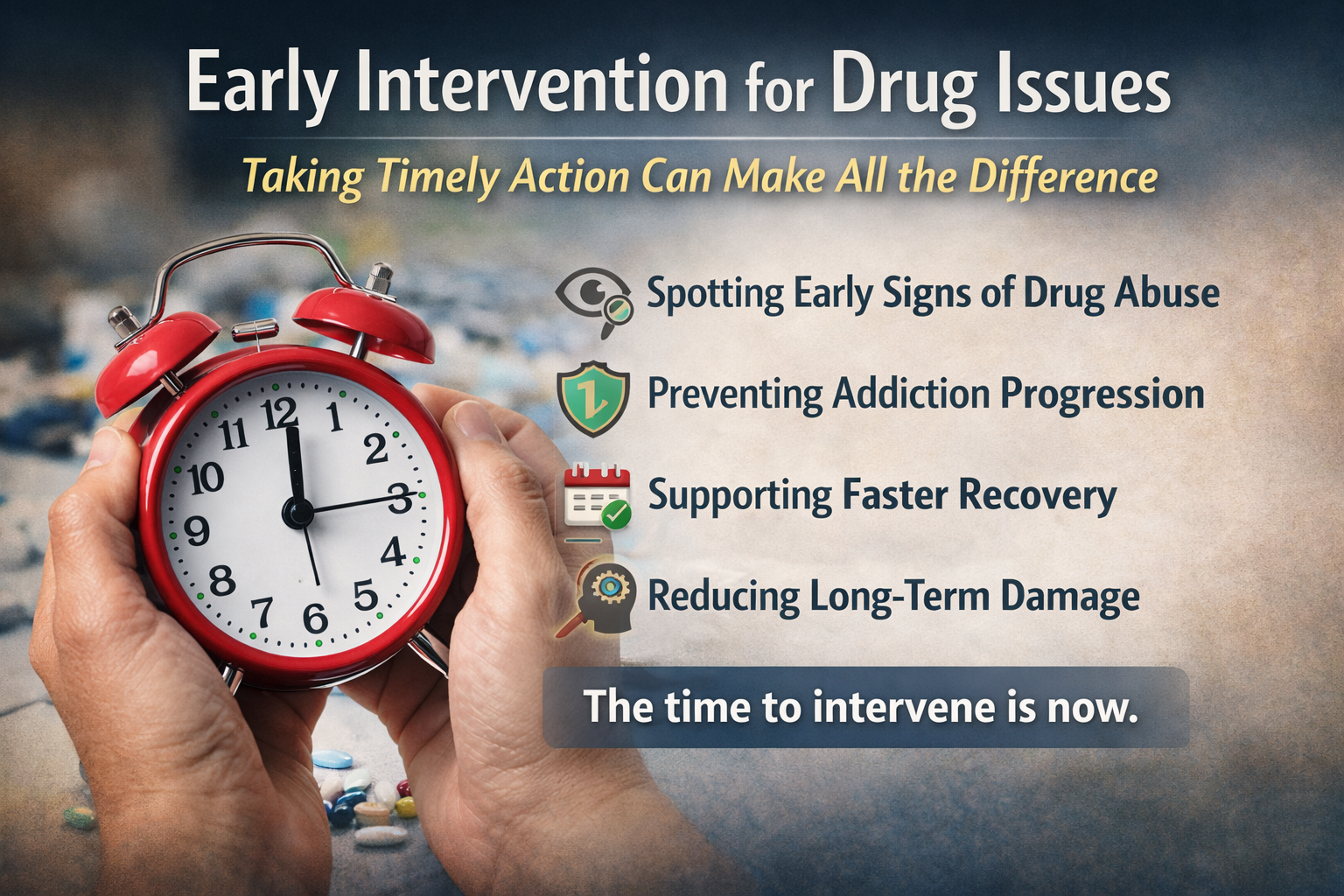
Early intervention refers to recognizing substance misuse at its initial stage and providing timely support before dependency becomes severe. When help is delayed, addiction silently damages physical health, mental stability, relationships, employment, and self-esteem.
Common consequences of late intervention include:
- Increased dependency and tolerance
- Severe mental health issues like depression or anxiety
- Family breakdowns and financial instability
- Higher relapse rates after treatment
Early help can prevent addiction from becoming life-threatening.
How Stigma Fuels Silence
In many communities, addiction is still viewed as a personal weakness rather than a medical condition. This misconception leads individuals to hide their struggles, while families often try to manage the situation privately rather than seek professional help.
Stigma shows up as:
- Fear of being labeled or judged
- Denial within families
- Hesitation to approach rehabilitation centers
- Social isolation of affected individuals
Unfortunately, silence allows addiction to grow unchecked.
Why Early Intervention Works
When treatment begins early, outcomes of addiction recovery in India improve significantly. Early intervention focuses on:
- Emotional counseling before dependency deepens
- Preventing physical deterioration
- Teaching coping mechanisms and stress management
- Avoiding legal or occupational consequences
People who receive timely care often require shorter rehabilitation periods and experience stronger long-term recovery.
Role of Families and Communities
Families are often the first to notice behavioral changes like withdrawal, mood swings, secrecy, or declining performance. Instead of confrontation or punishment, supportive communication and professional guidance can redirect a person toward addiction recovery in India.
Communities can help by:
- Promoting addiction awareness programs
- Normalizing conversations around mental health
- Encouraging non-judgmental support systems
Changing the Narrative
Addiction recovery begins when stigma ends. When individuals feel safe asking for help without fear of shame, recovery becomes possible, even in the early stages.
Breaking stigma isn’t just about awareness. It’s about compassion, education, and timely action. Providing de-addiction support, Samparka Welfare Trust can help you in this scenario with ease. Feel free to get in touch with us now.