
How Samparka Welfare Trust Supports Drug Addiction Recovery in Kolkata
Bustling streets of Kolkata hide silent battles many families never discuss. Addiction quietly enters homes, friendships, and workplaces across the city. Growing substance abuse now pushes many families to search for a trusted rehabilitation centre. Late nights, secrecy, and emotional distance slowly fracture once-happy households. Communities witness rising health crises and youth losing direction. Effective drug addiction recovery requires compassion, awareness, and professional care. Reliable support systems guide individuals toward healing and stability. Dedicated rehabilitation centre services provide structured recovery pathways for struggling individuals. Samparka Welfare Trust works tirelessly to support drug addiction recovery in Kolkata communities. Mission focuses on restoring hope, dignity, and long-term healing for individuals and families. Understanding Drug Addiction Drug addiction describes a chronic condition where substances control behavior and decision-making. Dependence develops when repeated drug use alters brain chemistry and emotional regulation. Strong cravings push individuals toward harmful habits despite serious consequences. Several factors often contribute to addiction. Peer pressure frequently encourages experimentation, especially among teenagers and young adults. Untreated anxiety, depression, or trauma often leads people toward substance misuse. Stress from academic, financial, or personal struggles increases vulnerability. Limited awareness about risks also encourages dangerous experimentation. Addiction damages both individuals and families in multiple ways. Physical health declines through organ damage, weakened immunity, and chronic fatigue. Emotional instability causes anger, anxiety, and withdrawal from loved ones. Financial problems arise due to job loss and uncontrolled spending on substances. Families often seek help from a trusted rehabilitation centre in Kolkata for drug addiction recovery. Early treatment at a professional rehabilitation centre significantly improves long-term recovery outcomes. The Role of Rehabilitation Centers in Recovery Professional support plays a critical role in overcoming addiction. Substance dependence affects both brain function and emotional stability. Self-recovery attempts rarely succeed without structured medical and psychological support. A professional rehabilitation centre provides a safe and controlled environment for recovery. Medical teams monitor withdrawal symptoms and prevent serious health complications. Doctors design treatment plans based on individual health conditions and addiction severity. Structured rehabilitation programs create stability and accountability for recovering individuals. Daily schedules include therapy sessions, counseling, wellness activities, and recovery education. Consistent routines gradually replace destructive habits with healthier lifestyle patterns. Therapy remains the core element of successful drug addiction recovery. Individual counseling helps patients identify emotional triggers and unhealthy coping behaviors. Group therapy builds peer encouragement and shared motivation during recovery journeys. Family counseling rebuilds trust and communication within affected households. Medical supervision ensures safety during detox and throughout treatment stages. A professional rehabilitation centre combines medical care, therapy, and emotional guidance. Comprehensive treatment greatly increases success in long-term drug addiction recovery. Supportive professionals also guide patients toward relapse prevention and lifestyle rebuilding. About Samparka Welfare Trust Samparka Welfare Trust stands as a dedicated organization supporting addiction recovery and rehabilitation. Mission focuses on helping individuals rebuild stable and healthy lives. Vision emphasizes compassionate treatment, dignity, and sustainable drug addiction recovery solutions. Samparka Welfare Trust actively serves communities across Kolkata and nearby regions. Community outreach programs spread awareness about substance abuse and mental health. Educational initiatives encourage early intervention and responsible lifestyle choices. Individuals struggling with substance dependence often approach the organization for professional help. Families seeking guidance also receive counseling and emotional support services. A supportive environment of a rehabilitation centre in Kolkata helps patients begin recovery with confidence. Samparka Welfare Trust believes addiction treatment must involve both individuals and families. Holistic recovery programs encourage accountability, healing, and long-term personal growth. Services Offered by Samparka Welfare Trust Samparka Welfare Trust provides comprehensive services designed for sustainable addiction recovery. Each program focuses on safety, emotional healing, and long-term stability. Detoxification support forms the first step of treatment. Medical professionals supervise withdrawal symptoms in a controlled rehabilitation centre environment. Careful monitoring protects patients from severe health risks during detox. Counseling and therapy play a central role in recovery programs. Individual therapy sessions explore personal triggers and emotional challenges. Group therapy encourages shared experiences and collective healing. Psychological support helps patients develop healthier coping mechanisms. Rehabilitation programs introduce structured daily routines and positive lifestyle habits. Skill development workshops prepare individuals for employment and independent living. Behavioral therapy encourages responsibility, discipline, and healthier decision-making. Family counseling strengthens support systems during the drug addiction recovery process. Therapists educate families about addiction, communication, and emotional boundaries. Healthy family involvement greatly improves recovery success rates. Comprehensive services ensure every patient receives personalized care and professional guidance. Samparka Welfare Trust remains committed to building stronger, addiction-free communities. Holistic Recovery Approach Successful recovery involves more than stopping substance use. Long-term healing requires emotional balance, healthy habits, and community support. Holistic treatment programs address psychological and social factors behind addiction. Mental health therapy helps patients manage stress, trauma, and anxiety. Improved emotional awareness strengthens long-term drug addiction recovery outcomes. Meditation and mindfulness practices improve focus, patience, and emotional control. Regular wellness activities encourage healthier physical and mental lifestyles. Community support also strengthens motivation during difficult recovery stages. Peer encouragement builds confidence and accountability throughout the healing process. Lifestyle rebuilding forms an important part of treatment programs. Patients learn time management, career skills, and relationship rebuilding strategies. A supportive rehabilitation centre environment guides individuals toward long-term independence and stability. Why Choose Samparka Welfare Trust for Addiction Recovery Samparka Welfare Trust provides professional and compassionate addiction treatment services. Experienced counselors understand the emotional and psychological complexities of addiction. Dedicated professionals design personalized treatment strategies for every patient. A safe and supportive rehabilitation centre environment promotes trust and motivation for recovery. Patients receive respectful care throughout each stage of treatment. Compassionate staff members encourage patients during difficult recovery phases. Therapists guide individuals through emotional challenges and relapse prevention strategies. Supportive recovery environments increase confidence and motivation for positive change. Structured programs also focus on sustainable drug addiction recovery outcomes. Long-term recovery remains the primary goal of every treatment program. Samparka Welfare Trust continues helping individuals rebuild healthy and productive lives. How to Get Help Recognizing addiction signs marks the first step toward recovery. Unusual behavior changes, secrecy, and declining health often

Alcohol Withdrawal & Detox in Kolkata: What You Should Know Before Starting Treatment
Late-night promises to quit drinking often disappear by morning. Morning headaches whisper a different story every day. Alcohol dependence quietly tightens its grip before most people notice. Families worry. Friends suggest help. Silence grows heavier. Real change begins with the first brave step: detox. Detox removes alcohol from the body and prepares the mind for recovery. However, withdrawal symptoms can become dangerous without medical supervision. Professional alcohol addiction treatment ensures safety during this difficult phase. People in Kolkata increasingly seek structured support for recovery. Trusted organizations like Samparka Welfare Trust guide individuals toward safe healing. This guide explains alcohol withdrawal, detox timelines, and treatment expectations. Knowledge helps individuals begin alcohol addiction treatment with confidence. What Is Alcohol Withdrawal? Alcohol withdrawal describes the physical and psychological symptoms that appear after someone stops drinking suddenly. Regular alcohol use changes how the brain functions. Over time, the brain adapts to alcohol’s calming effects and begins to depend on it to maintain balance. When drinking stops abruptly, the nervous system becomes overactive. The brain struggles to regain its natural chemical balance. This sudden adjustment triggers uncomfortable and sometimes dangerous symptoms. These reactions are known as alcohol withdrawal. Long-term drinking causes the body to treat alcohol like a necessary substance. Once alcohol disappears, the body reacts with stress signals such as anxiety, shaking, or sleep disturbances. Detox helps the body slowly stabilize during this adjustment phase. Professional programs of alcohol addiction treatment in Kolkata carefully manage these symptoms through medical supervision and structured care. Many individuals also benefit from alcohol addiction therapy, which addresses emotional triggers that lead to alcohol dependence. Understanding withdrawal helps people approach alcohol addiction treatment with realistic expectations and stronger commitment. Common Alcohol Withdrawal Symptoms Alcohol withdrawal symptoms vary in intensity depending on drinking history, health condition, and duration of alcohol use. Some individuals experience mild discomfort, while others develop severe complications. Early recognition of symptoms helps ensure timely alcohol addiction treatment. Mild Symptoms Mild symptoms often appear first and may feel similar to those of the flu or stress-related reactions. These include: Anxiety Headache Nausea Sweating Insomnia These symptoms usually begin within hours after the last drink. Many individuals ignore them and continue drinking to avoid discomfort. However, professional alcohol addiction therapy can help manage these early symptoms safely. Moderate Symptoms As withdrawal progresses, symptoms may intensify. Moderate symptoms can include: Increased heart rate Tremors or shaking hands Irritability and mood swings Confusion or difficulty concentrating These symptoms indicate the nervous system is struggling to adjust without alcohol. Medical professionals often recommend supervised alcohol addiction treatment at this stage to prevent complications. Severe Symptoms Severe withdrawal symptoms require immediate medical attention. These may include: Seizures Hallucinations Delirium tremens (DTs) Delirium tremens is a life-threatening condition involving severe confusion, fever, agitation, and hallucinations. Without prompt care, it can become fatal. Specialized medical teams in a rehabilitation centre closely monitor patients to prevent such complications. Safe detox programs combine medication, monitoring, and alcohol addiction therapy to stabilize the body and mind. Early medical intervention significantly improves safety during alcohol addiction treatment and increases the chances of successful recovery. Alcohol Withdrawal Timeline Alcohol withdrawal usually follows a predictable timeline after the final drink. However, each individual experiences symptoms differently depending on drinking habits and overall health. Medical professionals often monitor patients closely during alcohol addiction treatment to manage symptoms safely. 6–12 Hours After the Last Drink Early withdrawal symptoms often appear within the first few hours. Individuals may experience anxiety, headaches, nausea, and restlessness. Sleep disturbances and sweating are also common. These symptoms may seem manageable, but they signal the beginning of the body’s adjustment process. 12–24 Hours During this stage, symptoms can become more noticeable. Tremors may develop, particularly in the hands. Some individuals also experience mild hallucinations, such as seeing or hearing things that are not present. Doctors typically begin structured alcohol addiction therapy to reduce discomfort and stabilize the nervous system. 24–48 Hours The risk of seizures increases during this phase. Sudden seizures can occur without warning, making medical supervision essential. Patients undergoing alcohol addiction treatment often receive medications to reduce seizure risk and control severe agitation. 48–72 Hours Withdrawal symptoms usually peak during this period. Some individuals may develop delirium tremens, which includes severe confusion, fever, hallucinations, and rapid heartbeat. Immediate treatment in a rehabilitation centre becomes critical during this stage. The exact timeline varies from person to person. Factors such as drinking history, physical health, and previous detox experiences influence withdrawal intensity. Structured alcohol addiction treatment programs ensure the body passes through each stage safely. Why Medical Detox Is Important Alcohol detox should never happen without professional supervision. Sudden withdrawal can trigger serious complications that require immediate medical care. Medical detox programs monitor vital signs such as heart rate, blood pressure, and body temperature. Doctors adjust treatment based on these observations to ensure patient safety. Medications often help reduce anxiety, tremors, and insomnia during early withdrawal. Preventing seizures remains one of the most important goals of supervised detox. Proper medication and monitoring significantly reduce this risk. Medical teams also watch for signs of delirium tremens and intervene quickly if symptoms appear. Professional programs combine physical care with emotional support. Many individuals experience fear, mood swings, and confusion during detox. Structured alcohol addiction treatment in Kolkata helps patients stay motivated throughout the process. Organizations like Samparka Welfare Trust provide safe environments where individuals receive medical care, counseling, and guidance. Medical detox creates a stable foundation for long-term alcohol addiction therapy and lasting recovery. What Happens During Alcohol Detox Treatment Alcohol detox programs follow a structured process designed to stabilize the body safely. Treatment begins with a detailed medical evaluation. Doctors review drinking history, physical health, and mental health conditions before starting alcohol addiction treatment. Initial Medical Assessment Medical professionals perform blood tests, health screenings, and psychological evaluations. This assessment helps determine the severity of alcohol dependence and potential withdrawal risks. Personalized Detox Plan Every patient receives a customized detox strategy. Doctors adjust treatment plans based on age, health

Family Involvement in Addiction Recovery: The Forgotten Bridge to Sustainable Healing
Addiction does not exist in isolation. It affects families emotionally, psychologically, and socially. Yet many recovery programs overlook one of the most powerful healing forces: family involvement. When families are engaged in the addiction recovery journey, outcomes improve dramatically. Addiction’s Impact on Families Families experience: Emotional exhaustion Broken trust Financial strain Fear, anger, and confusion Without guidance, families may unknowingly enable addiction or react in ways that worsen the situation. Why Family Support Matters Recovery is challenging, especially after leaving a structured rehabilitation environment. A supportive family provides: Emotional security Accountability Encouragement during setbacks A stable, substance-free environment When families understand addiction, they become allies rather than obstacles. Family Counseling: Healing Together Family therapy educates loved ones about: Addiction as a disease Healthy communication Setting boundaries Avoiding enabling behaviors It creates a space for honest dialogue, forgiveness, and mutual healing. Reducing Relapse Through Connection Loneliness and unresolved family conflict are major relapse triggers. When family involvement in addiction recovery in India is present: Individuals feel valued and understood Stress levels reduce Recovery motivation increases Strong relationships act as emotional anchors during difficult moments. Rebuilding Trust Takes Time Trust doesn’t return overnight. Family involvement in addiction recovery encourages patience and realistic expectations. Recovery is a journey. Setbacks don’t mean failure. A Shared Path Forward When families heal together, recovery becomes sustainable. Addiction recovery is not just about saving one life. It’s about restoring entire families and futures. Samparka Welfare Trust has become a trusted name in addiction recovery treatment. It always promotes family involvement in addiction recovery for better outcomes. Talk to us to learn how family involvement can help us provide our services.

Counseling and Therapy Redefined: What Modern Rehabilitation Centers Offer Beyond Detox
Detoxification is often mistaken for the end goal of addiction treatment. In reality, it is only the first step. True recovery requires addressing the emotional, psychological, and behavioral patterns that lead to substance dependence in the first place. Here comes the role of counseling and therapy in rehabilitation. Modern rehabilitation centers now focus heavily on therapeutic care, ensuring that recovery is sustainable rather than temporary. Detox Treats the Body, Therapy Heals the Mind While detox removes substances from the body, it does not: Resolve emotional trauma Teach coping strategies Repair damaged relationships Address mental health disorders Without counseling and therapy in rehabilitation in India, individuals often return to the same triggers that caused addiction initially. Types of Counseling Used in Modern Rehab Individual Counseling One-on-one sessions help individuals explore personal struggles, triggers, guilt, and emotional pain in a safe space. Group Therapy Sharing experiences builds accountability and reduces feelings of isolation. Peer support plays a powerful role in motivation. Family Counseling Addiction affects families deeply. Therapy helps rebuild trust, improve communication, and establish healthy boundaries. Behavioral Therapy Techniques like Cognitive Behavioral Therapy (CBT) help individuals recognize destructive patterns and replace them with positive behaviors. Emotional Regulation and Life Skills Therapy teaches individuals how to: Manage stress without substances Handle anger, anxiety, and cravings Build routines and discipline Improve decision-making skills These tools are essential for life after rehabilitation. Long-Term Recovery Planning Modern rehabilitation doesn’t stop at discharge. Aftercare programs, follow-up counseling, and relapse-prevention planning help individuals remain grounded as they re-enter daily life. Recovery is not about perfection. It’s about progress and resilience. Healing That Lasts When counseling and therapy become the foundation of rehabilitation, recovery transforms from short-term abstinence into long-term emotional wellness. Both effectively empower individuals to reclaim control over their thoughts, choices, and future. Samparka Welfare Trust has become one of the most trusted and modern rehabilitation centres in India for rehabilitation services. Call us now if you want more information.
Why Early Intervention Matters in Addiction Recovery
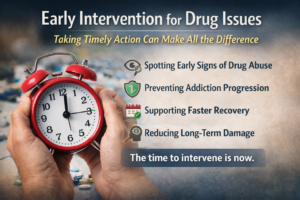
Addiction is not a moral failure. It is a complex health condition influenced by psychological, biological, and social factors. Yet, stigma remains one of the biggest barriers preventing individuals from seeking help early. The fear of judgment, shame, or social exclusion often delays treatment, making addiction recovery more difficult and relapse more likely. Understanding the Cost of Delay Early intervention refers to recognizing substance misuse at its initial stage and providing timely support before dependency becomes severe. When help is delayed, addiction silently damages physical health, mental stability, relationships, employment, and self-esteem. Common consequences of late intervention include: Increased dependency and tolerance Severe mental health issues like depression or anxiety Family breakdowns and financial instability Higher relapse rates after treatment Early help can prevent addiction from becoming life-threatening. How Stigma Fuels Silence In many communities, addiction is still viewed as a personal weakness rather than a medical condition. This misconception leads individuals to hide their struggles, while families often try to manage the situation privately rather than seek professional help. Stigma shows up as: Fear of being labeled or judged Denial within families Hesitation to approach rehabilitation centers Social isolation of affected individuals Unfortunately, silence allows addiction to grow unchecked. Why Early Intervention Works When treatment begins early, outcomes of addiction recovery in India improve significantly. Early intervention focuses on: Emotional counseling before dependency deepens Preventing physical deterioration Teaching coping mechanisms and stress management Avoiding legal or occupational consequences People who receive timely care often require shorter rehabilitation periods and experience stronger long-term recovery. Role of Families and Communities Families are often the first to notice behavioral changes like withdrawal, mood swings, secrecy, or declining performance. Instead of confrontation or punishment, supportive communication and professional guidance can redirect a person toward addiction recovery in India. Communities can help by: Promoting addiction awareness programs Normalizing conversations around mental health Encouraging non-judgmental support systems Changing the Narrative Addiction recovery begins when stigma ends. When individuals feel safe asking for help without fear of shame, recovery becomes possible, even in the early stages. Breaking stigma isn’t just about awareness. It’s about compassion, education, and timely action. Providing de-addiction support, Samparka Welfare Trust can help you in this scenario with ease. Feel free to get in touch with us now.
Top 5 Signs You Need Alcohol Addiction Treatment
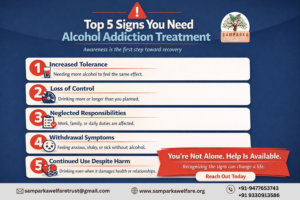
Drinking sometimes starts innocently, then quietly grows into something heavier. One extra drink becomes routine before anyone notices the shift. Denial often whispers that everything is under control. Hesitation feels normal when habits blur into dependence. Alcohol addiction treatment enters conversations that many people try to avoid. This blog speaks to those questioning their relationship with alcohol. No labels appear here, only honest reflection. Alcohol addiction treatment awareness begins with curiosity, not shame. Pause, read, and notice patterns without judging yourself. Change starts by listening to what discomfort is saying. Stories like yours exist everywhere. Progress often starts with small realizations. Awareness opens doors previously unseen. Support exists beyond this page. 5 Common Signs That Need Alcohol Addiction Treatment Sign #1: You’ve Lost Control Over How Much or How Often You Drink Loss of control rarely announces itself loudly. Drinks intended as “just one” become several. Promises to cut back dissolve after stressful days. Morning drinking or frequent binge episodes start feeling justified. This pattern reflects more than poor discipline. Loss of control signals the growing need for alcohol addiction treatment because the brain’s reward system has shifted. Alcohol now dictates behavior, not choice. Recognizing this shift early prevents deeper dependence. Sign #2: Alcohol Is Affecting Your Health (Physical or Mental) Physical symptoms often appear quietly. Poor sleep, constant fatigue, weight changes, or concerns about the liver may emerge. Mental health also suffers from rising anxiety, depression, or unpredictable mood swings. Many people begin drinking to manage stress or emotional pain. Unfortunately, alcohol intensifies those struggles over time. Without alcohol addiction treatment, health declines progressively, making recovery more complicated and risks greater. Sign #3: Your Relationships or Responsibilities Are Suffering Alcohol misuse strains connections first. Arguments with family increase. Friends express concern or distance themselves. Missed workdays, declining performance, or academic issues become frequent. Secrecy replaces openness. Drinking alone feels easier than explaining behavior. These real-life consequences often mirror stories many readers recognize. Relationships act as early warning systems when alcohol disrupts balance. Sign #4: You Experience Withdrawal Symptoms Without Alcohol Shaking hands, sweating, nausea, headaches, or intense anxiety indicate withdrawal. Irritability and restlessness follow quickly. These symptoms show physical dependence, not weakness. Withdrawal can become dangerous without medical supervision. Alcohol addiction treatment in Kolkata provides professional detox support, protecting health while easing discomfort safely. Sign #5: You Continue Drinking Despite Negative Consequences Legal trouble, financial strain, or career setbacks sometimes fail to stop drinking. Medical warnings go ignored. “Rock bottom” moments repeat without lasting change. This cycle signals the need for structured alcohol addiction treatment. Professional care addresses root causes, not just surface behavior. What Alcohol Addiction Treatment Looks Like Alcohol addiction treatment adapts in Kolkata to individual needs rather than forcing one solution. Detox often comes first, primarily when withdrawal risks exist. Medical teams manage symptoms safely and comfortably. Treatment then continues through inpatient or outpatient programs. Inpatient care offers immersive, structured environments, while outpatient options provide flexibility for daily responsibilities. Therapy forms the foundation of recovery. Individual counseling explores triggers, thought patterns, and emotional health. Group therapy builds accountability and shared understanding. Family counseling repairs strained relationships. Some individuals benefit from medication-assisted treatment, which reduces cravings and stabilizes brain chemistry. Long-term success relies on ongoing support. Relapse prevention planning, aftercare programs, peer groups, and lifestyle changes strengthen recovery. Alcohol addiction treatment focuses on rebuilding physical health, emotional resilience, and purpose beyond alcohol. When to Seek Help and Why Earlier Is Better Fear often delays seeking help. Many worry about judgment, privacy, or losing control. Treatment programs prioritize confidentiality and respect personal dignity. Supportive professionals guide each step without pressure. Early intervention reduces health risks, relationship damage, and emotional distress. Recovery becomes smoother when dependence remains less severe. Alcohol addiction treatment works best when approached proactively rather than reactively. Hope grows faster when help arrives sooner. Asking for support reflects self-awareness, not failure. Recovery begins with honesty and courage. Choosing alcohol addiction treatment represents strength, not defeat. Professional help offers tools, guidance, and compassion during change. Support systems are available at every stage of recovery. Reaching out today prevents deeper struggles tomorrow. Schedule an assessment and consult with us. One conversation can open the path toward clarity, health, and lasting freedom.
